
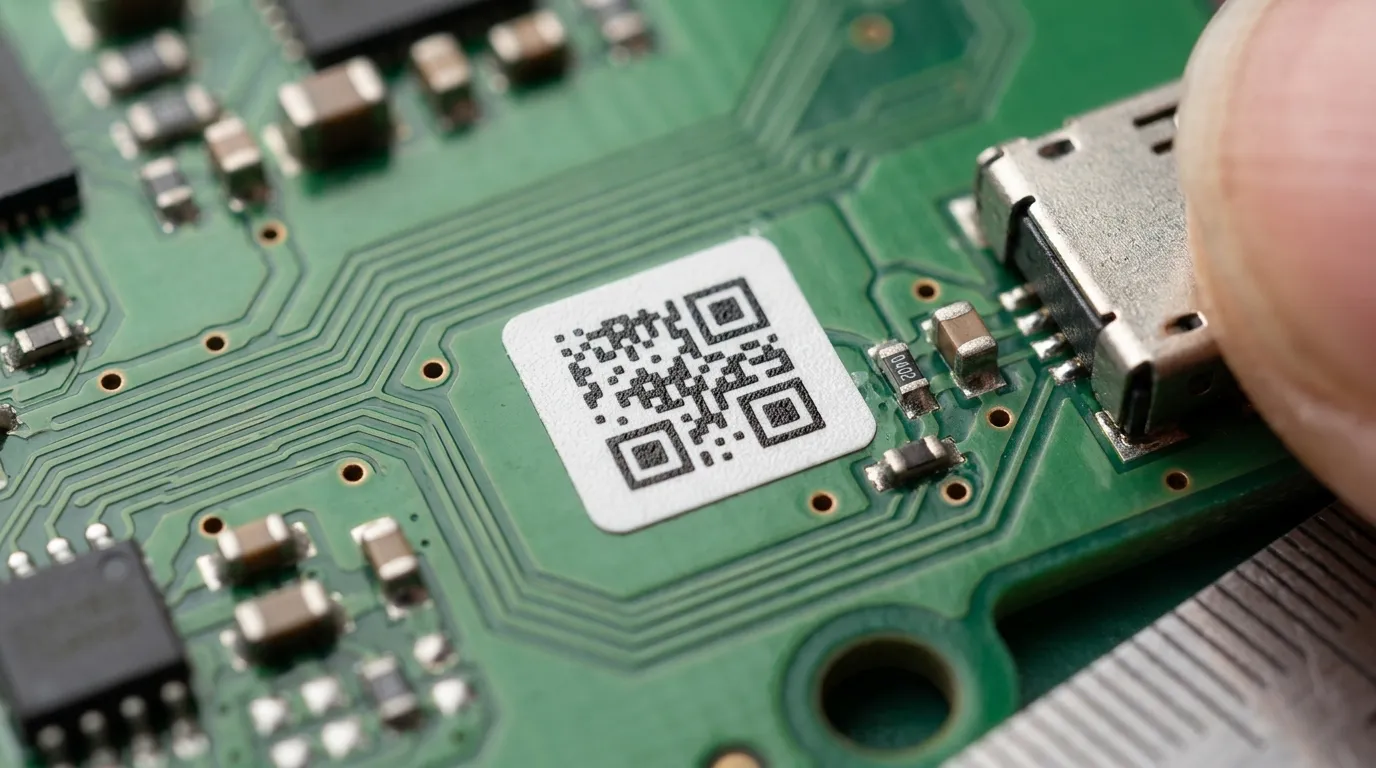
Heat-resistant labels: materials & applications
Heat-resistant labels are made from special materials that can withstand extreme temperatures. Depending on the material, they can withstand temperatures ranging from 150°C to over 300°C. They are used wherever standard paper labels fail: in electronics manufacturing, plant engineering, sterilisation and the automotive industry.
Material comparison
PET film (up to 150°C): The cost-effective option for moderate heat. Suitable for PCB markingand general industrial applications. Polyimide/Kapton (up to 300°C): The gold standard for high temperatures. Withstands soldering processes and powder coating. Ceramic labels (up to 1,000°C): For extreme applications in melting furnaces and glass manufacturing.
Typical applications
PCB assembly (SMD soldering), powder coating, autoclave sterilisation, motor testing, baking processes in the food industry, and marking of heating pipes and steam lines.
Related guide articles
Up to what temperature can heat-resistant labels withstand?
It depends on the material: PET film up to 150°C, polyimide up to 300°C and ceramic labels up to over 1,000°C. PET or polyimide labels are sufficient for most industrial applications.
Do the barcodes remain readable in high temperatures?
Yes, professional heat-resistant labels use a special thermal transfer printing process that withstands the same temperatures as the substrate.
Can I print heat-resistant labels myself?
In principle, yes, using a thermal transfer printer and the appropriate ribbon (resin ribbon). For polyimide labels, you will need special print settings.
Questions on this topic? Call us on +49 7164 - 918 0456 — we’d be happy to advise you personally.