
Film labels vs. thermal paper – which material is best for what?
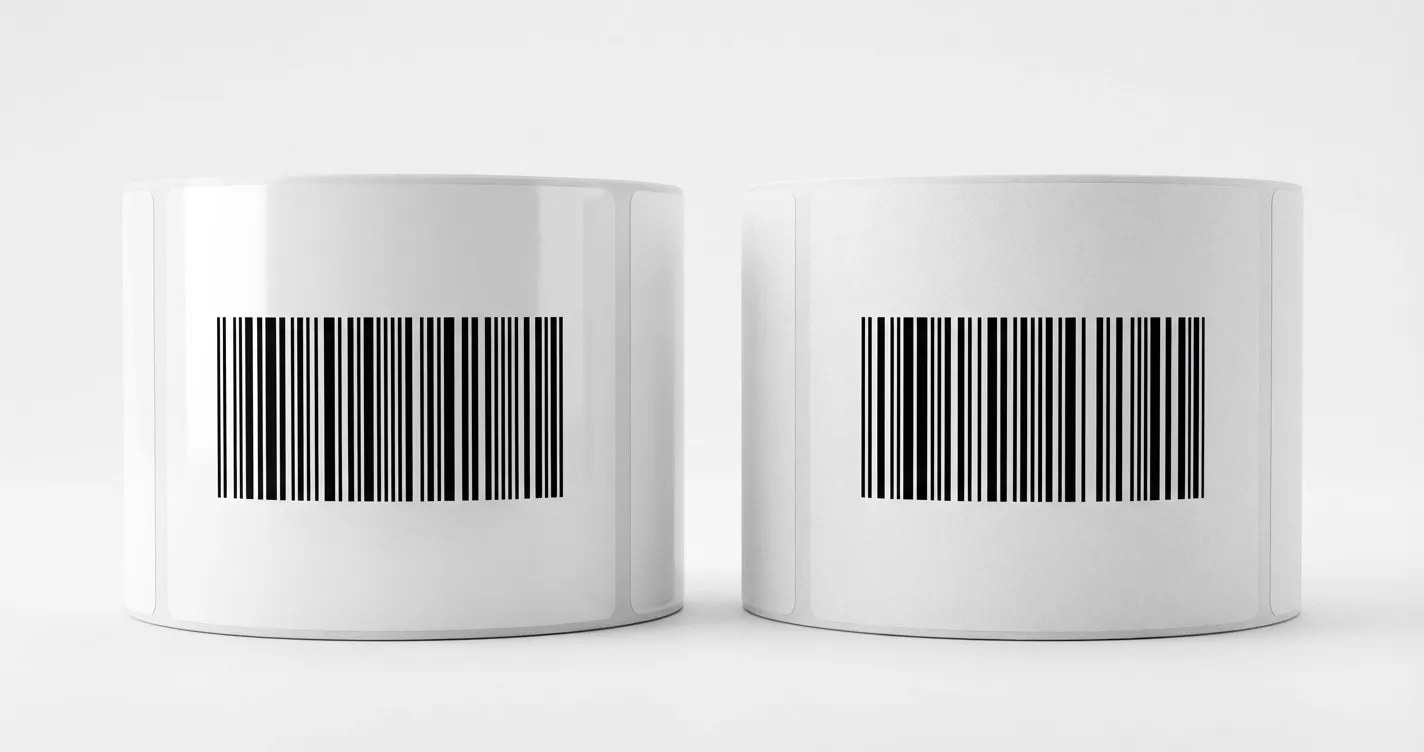
Anyone ordering barcode labels will sooner or later be faced with the question: film or thermal paper? The choice of material affects durability, print quality and cost — and ultimately determines whether the label will reliably fulfil its purpose over months and years. This guide explains the key differences and helps you find the right material for your specific application.
What are film labels?
Film labels are made of plastic — usually polyester (PET), polyethylene (PE) or polypropylene (PP). The material is tear-resistant, water-repellent and resistant to chemicals, UV radiation and temperature fluctuations. Film labels are printed using the thermal transfer process: a heated print head transfers the ink from a ribbon onto the film, creating a permanently adhesive, abrasion-resistant print.
Typical applications include inventory labelling, equipment labelling in industry, inspection labels in accordance with DGUV V3, cable labelling and all applications where the label must remain legible for years — even under harsh conditions.
What is thermal paper?
Thermal paper (also known as direct thermal paper) is a specially coated paper that reacts to heat. In direct thermal printing, heated print head elements cause a colour change directly on the paper surface — without the need for a ribbon. This makes printing fast, straightforward and cost-effective.
However, the print is sensitive: sunlight, heat, moisture and friction can cause the print to fade. Thermal paper is therefore particularly suitable for short-term applications such as shipping labels, receipts, temporary stock labels or price tags in retail.
Direct comparison: film vs. thermal paper
| Property | Film (PET/PE/PP) | Thermal paper |
|---|---|---|
| Durability | Several years, even outdoors | Weeks to a few months |
| Water resistance | Yes — waterproof | No — swells |
| UV/light resistance | High | Low — fades |
| Abrasion resistance | Very high | Low — friction erases print |
| Temperature resistance | −40 °C to +150 °C (depending on material) | Problematic from approx. 60 °C |
| Chemical resistance | Resistant to oils, solvents, cleaning agents | Sensitive |
| Printing method | Thermal transfer (with ribbon) | Direct thermal (without ribbon) |
| Cost per label | Higher (material + ribbon) | Cheaper (no ribbon required) |
| Typical applications | Inventory, inspection labels, plant engineering, outdoor | Shipping, checkout, warehouse (short-term) |
When to choose film labels
Film is the right choice when the label needs to remain legible permanently. This applies primarily to three areas:
1. Inventory and plant identification: Inventory labels on IT equipment, machinery or furniture must last for years — often in environments involving cleaning agents, mechanical stress or fluctuating temperatures. Polyester film with security slits is the standard here.
2. Inspection labels and safety marking: Inspection stickers in accordance with DGUV V3, cable markings and maintenance labels document safety-related inspections. A faded label can mean that an inspection deadline is overlooked in an emergency.
3. Outdoor and industrial use: Labels on pipework, control cabinets or outdoor installations are exposed to wind and weather. Only film materials such as PET or PP can withstand these conditions in the long term.
When thermal paper is sufficient
Thermal paper is the cost-effective alternative when labels are only in use for a short period. Shipping labels on parcels are disposed of after delivery — using film would be unnecessarily expensive here. The same applies to price labels in retail, temporary warehouse markings or event badges.
Another advantage: as no ribbon is required, direct thermal printers are particularly low-maintenance. For businesses with high label throughput and short usage periods, this is a significant cost factor.
Common mistake: using thermal paper for permanent labelling
In practice, we repeatedly see companies using thermal paper for inventory or inspection labelling for cost reasons. This saves money in the short term, but leads to problems in the long run: barcodes become unreadable after a few months, inspection dates are no longer visible, and the entire labelling system has to be replaced — at significantly greater effort and cost than the original film solution.
Rule of thumb: If a label needs to remain legible for longer than 6 months or is exposed to moisture, heat or chemicals, there is no alternative to film.
Our range — pre-printed on rolls
At barcodeetiketten.com, you can obtain both material types as pre-printed labels on a roll. Whether white film, silver film or thermal paper — you configure the barcode type, number range and format directly online and receive your labels within a few working days.
Find the right labels:
Configure universal labels — choose the material, format and barcode to suit your needs.
Inventory labels — film labels with security perforations for equipment identification.
Inspection labels — robust film labels for inspections in accordance with DGUV V3.
Further guides
Protective laminate for labels — how an additional lamination further extends the service life.
Waterproof labels & stickers — everything you need to know about weather-resistant materials.
Heat-resistant labels — materials for high-temperature applications.
Inventory management with barcodes — barcode labels for stock-taking.